

Does a Light Coral Blanket keep you warm?
Jan 02, 2026
As a supplier of light coral blankets, I often get asked the question: "Does a light coral blanket keep you warm?" It's a valid inquiry, especially considering that the primary function of a blanket is to provide warmth and comfort. In this blog post, I'll delve into the science behind how blankets work to keep us warm, and specifically, whether a light coral blanket can effectively serve this purpose.
Understanding How Blankets Keep You Warm
To understand if a light coral blanket can keep you warm, we first need to understand the basic principles of heat transfer. There are three main ways heat can be transferred: conduction, convection, and radiation.
Conduction is the transfer of heat through direct contact. When you touch a cold object, heat from your body is transferred to the object through conduction. Convection is the transfer of heat through the movement of fluids (liquids or gases). For example, warm air rises and cold air sinks, creating a convection current. Radiation is the transfer of heat through electromagnetic waves, such as the heat we feel from the sun.
A blanket works by reducing heat transfer in all three ways. It acts as an insulator, creating a barrier between your body and the cold environment. The fibers in the blanket trap air, which is a poor conductor of heat. This trapped air layer slows down the conduction of heat from your body to the outside. Additionally, the blanket helps to prevent convection by blocking the movement of air around your body. And to some extent, it also reduces heat loss through radiation by reflecting some of the infrared radiation emitted by your body.
The Material of Light Coral Blankets
Light coral blankets come in various materials, each with its own thermal properties. Some common materials used in light coral blankets include polyester, cotton, and a blend of both.
Polyester
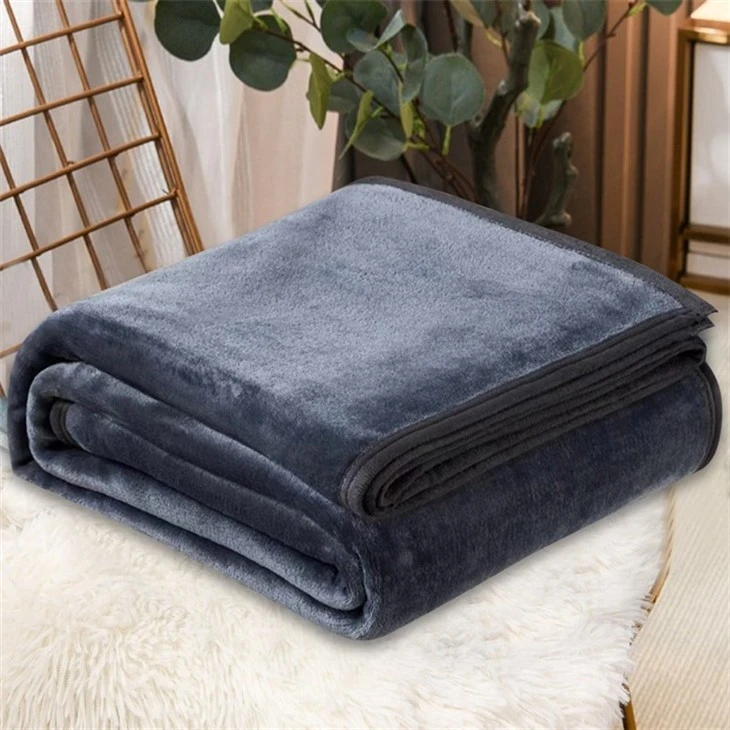
Polyester is a synthetic fiber that is widely used in blanket manufacturing. It is known for its durability, wrinkle resistance, and affordability. Polyester blankets are also relatively lightweight and easy to care for. In terms of warmth, polyester has good insulating properties because it can trap air effectively. Our 100% Polyester Brushed Coral Fleece Blanket is a prime example. The brushed surface of the fleece creates a soft and fluffy texture that further enhances its ability to trap air, providing excellent warmth.
Cotton
Cotton is a natural fiber that is soft, breathable, and hypoallergenic. It is a popular choice for blankets, especially for those with sensitive skin. Cotton blankets are generally more absorbent than polyester blankets, which means they can wick away moisture from your body. However, in terms of warmth, cotton is not as insulating as polyester. It has a lower ability to trap air, so it may not keep you as warm in cold environments.
Blends
Many light coral blankets are made from a blend of polyester and cotton. This combination aims to take advantage of the best properties of both materials. The polyester provides warmth and durability, while the cotton adds softness and breathability. Our Signature Coral Blanket is a great example of a blend blanket. It offers a balance of warmth, comfort, and style.
Thickness and Weave
In addition to the material, the thickness and weave of the blanket also play a crucial role in determining its warmth. A thicker blanket generally provides more insulation because it has more layers of fibers to trap air. However, it's important to note that thickness alone is not the only factor. The weave of the blanket also affects its ability to trap air. A tight weave can prevent air from escaping, while a loose weave may allow more air to circulate, reducing its insulating properties.
Our Coral Fleece Throw is a lightweight yet warm option. The fleece material has a dense weave that effectively traps air, making it suitable for use in various temperatures. It's also soft and cozy, making it perfect for snuggling up on the couch or in bed.
The Color Factor
You might be wondering if the color of the blanket, in this case, light coral, has any impact on its warmth. While color can affect how much heat a material absorbs from sunlight (dark colors absorb more heat than light colors), it has little to do with the blanket's ability to keep you warm indoors. The primary function of a blanket is to prevent heat loss from your body, and this is mainly determined by the material, thickness, and weave, rather than the color.
Conclusion: Does a Light Coral Blanket Keep You Warm?
In conclusion, a light coral blanket can indeed keep you warm, depending on its material, thickness, and weave. Polyester-based light coral blankets, such as our 100% Polyester Brushed Coral Fleece Blanket, are excellent choices for warmth due to their ability to trap air effectively. Blended blankets like the Signature Coral Blanket offer a balance of warmth and comfort. And the Coral Fleece Throw provides a lightweight yet warm option for everyday use.
If you're in the market for a warm and cozy light coral blanket, we have a wide range of options to choose from. Our blankets are not only designed to keep you warm but also to add a touch of style to your home. Whether you're looking for a blanket for your living room, bedroom, or as a gift, we've got you covered.

Contact for Procurement
If you're interested in purchasing our light coral blankets for your business or personal use, we'd love to hear from you. We offer competitive prices, high-quality products, and excellent customer service. Please feel free to reach out to us for more information and to discuss your procurement needs.
References
- "Textile Science and Technology" by Ibrahim A. El-Shafei
- "Thermal Properties of Textiles" by B. K. Behera