

Do Babyhug Blankets have a uniform color distribution?
Jan 15, 2026
As a supplier of Babyhug Blankets, I've often pondered a question that might seem simple yet holds significant importance in our industry: Do Babyhug Blankets have a uniform color distribution? In this blog post, I'll delve into this topic, considering factors such as manufacturing processes, consumer preferences, and market trends.
The Manufacturing Perspective
The process of making Babyhug Blankets is complex and involves multiple steps, each of which can influence the color distribution. At the beginning of the manufacturing process, the choice of raw materials plays a crucial role. Different types of fabrics absorb dyes differently. For instance, the Fabric Printed Minky Fabric for Baby Blanket has unique properties in terms of its texture and composition. This fabric may absorb dyes unevenly, leading to variations in color. Manufacturers must carefully select the dyes and the dyeing methods to ensure a more consistent color.
The dyeing process itself is a significant determinant of color distribution. There are various dyeing techniques available, such as dip - dyeing, spray - dyeing, and print - dyeing. Each method has its own set of advantages and challenges. Dip - dyeing, for example, involves immersing the fabric into a dye bath. However, if the fabric is not properly agitated during this process, the color may not distribute evenly, resulting in patches of different shades. On a large - scale production line, maintaining a consistent dyeing process across all blankets is a challenging task. Small variations in temperature, dye concentration, and dyeing time can all lead to differences in color.
Another aspect of manufacturing that affects color distribution is the printing process, especially for blankets like the Cartoon Raschel Blanket. Printing designs on the blankets requires precise alignment and control of the ink application. If the printing equipment is not calibrated correctly or if there are issues with the ink flow, the colors in the printed design may appear faded or inconsistent in some areas.
Consumer Preferences and Market Trends
Consumer preferences play a vital role in determining the color distribution of Babyhug Blankets. Parents often look for blankets that are not only soft and comfortable but also visually appealing for their babies. Pastel colors such as pink, blue, and yellow are commonly associated with babies and are very popular in the market. However, there is also a growing trend towards more vibrant and unique colors. Some consumers prefer blankets with bold patterns and bright colors to add a touch of personality to their baby's nursery.
As a supplier, we need to balance the demand for popular colors with the need to offer a diverse range of options. This means that in our production, we may not have a completely uniform color distribution. For example, we may produce a larger quantity of the classic pastel - colored Baby Blankets for Newborns to meet the mainstream demand, while also producing a smaller quantity of blankets in more unique colors for niche markets.
Market trends also change over time. For instance, in recent years, there has been an increased interest in eco - friendly and natural - looking colors. Consumers are more conscious about the materials used in baby products, and they prefer colors that are derived from natural sources. This shift in consumer preference has led us to adjust our production to include more blankets with earthy tones and muted colors.
Quality Control and Assurance
To address the issue of color distribution, we have implemented a rigorous quality control process. Our quality control team inspects each batch of blankets carefully. They use color - matching tools to ensure that the colors of the blankets within a batch are as consistent as possible. If there are significant variations in color, the batch may be rejected or sent back for further processing.
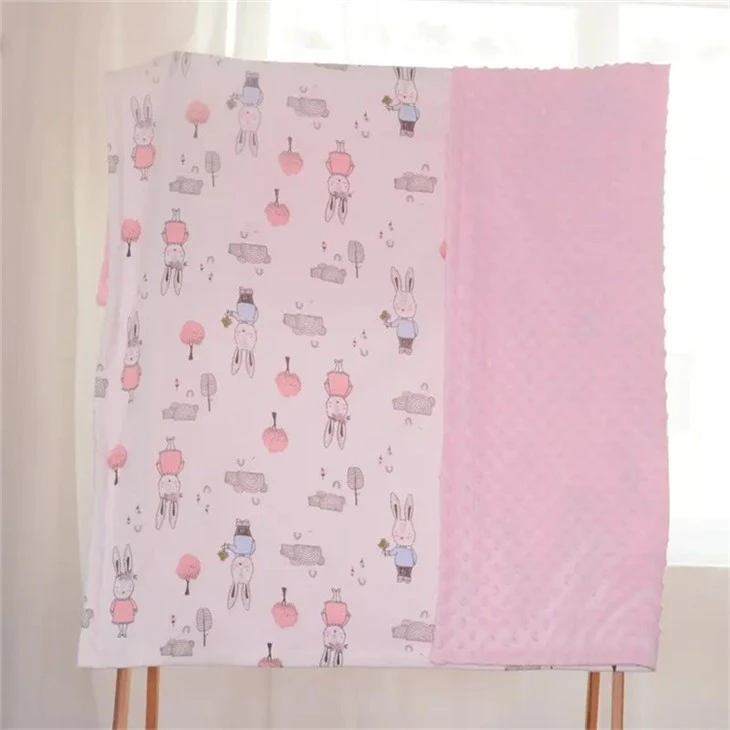

We also conduct regular testing on our dyes and printing inks to ensure their quality and color fastness. Color fastness is an important factor, especially for baby blankets, as they will be washed frequently. We want to ensure that the colors do not fade or bleed during the washing process, which could also affect the overall appearance and color distribution of the blankets.
Analyzing Color Distribution
To determine whether Babyhug Blankets have a uniform color distribution, we can use statistical methods. We collect data on the color of each blanket produced, including the hue, saturation, and brightness. By analyzing this data, we can calculate the variance of the color characteristics. A low variance would indicate a more uniform color distribution, while a high variance would suggest significant differences in color.
In addition to statistical analysis, we also rely on customer feedback. If customers frequently complain about the color inconsistency of our blankets, it is a clear sign that we need to improve our color distribution. We take customer feedback seriously and use it as an opportunity to make adjustments to our manufacturing processes.
Conclusion
In conclusion, achieving a truly uniform color distribution for Babyhug Blankets is a challenging but attainable goal. Manufacturing processes, consumer preferences, and market trends all have a significant impact on color distribution. While we strive to produce blankets with consistent colors through strict quality control and the use of advanced manufacturing techniques, there will always be some minor variations.
As a supplier, we are committed to providing high - quality Babyhug Blankets that meet the needs and expectations of our customers. We understand that color is an important aspect of these products, and we will continue to invest in research and development to improve our color distribution.
If you are interested in purchasing Babyhug Blankets for your business or for personal use, we welcome you to contact us for procurement discussions. We can offer you a wide range of options in terms of colors, designs, and fabrics to meet your specific requirements.
References
- Textile Dyeing and Printing: Principles and Practice. A comprehensive book on textile dyeing processes and their impact on color distribution.
- Consumer Trends in Baby Products: An annual report that analyzes the changing preferences of consumers in the baby product market, including color preferences for baby blankets.
- Quality Control in Textile Manufacturing: A research paper that discusses the importance of quality control in ensuring consistent color in textile products.